Planning travel to Colombia? The yellow fever answer depends on two separate questions: whether vaccination is recommended for the places on your itinerary, and whether you need proof of vaccination to enter. Those are not always the same.
The short answer: CDC currently lists yellow fever vaccination as required for arriving travelers aged 1 year and older. Separately, CDC recommends vaccination for most travelers aged 9 months and older, with important itinerary-based exceptions.
Last reviewed by Runway Health: September 22, 2026. This guidance was checked against the current CDC traveler guidance for Colombia and the WHO country list. Border rules and health notices can change, so confirm the current requirement with the relevant embassy, consulate, or airline before departure.
Yellow fever recommendation vs. entry rule for Colombia
Recommendation: CDC recommends vaccination for travelers aged 9 months and older except for travel limited to Bogotá, high-altitude areas above 2,300 m (7,550 ft), San Andrés and Providencia, or generally the cities of Barranquilla, Cali, Cartagena, or Medellín. A current CDC yellow fever notice adds urgency to checking the live guidance before travel.
Entry requirement: CDC’s current traveler page lists vaccination as required for all arriving travelers aged 1 year and older. Requirements are subject to change, so verify with Colombia’s embassy or consulate and your airline before relying on an older rule or itinerary assumption.
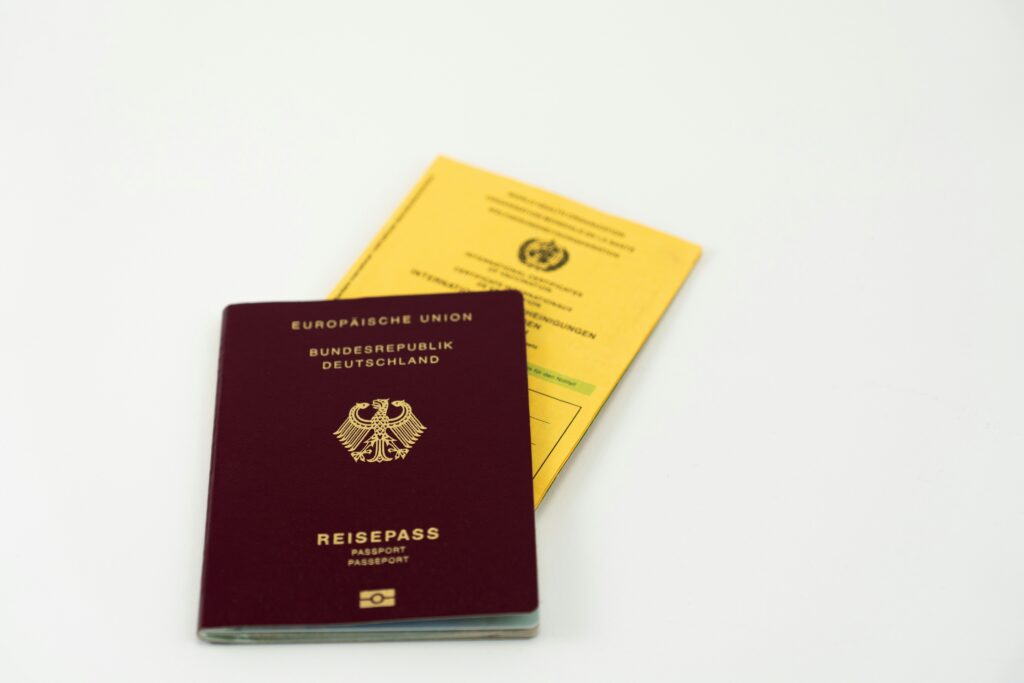
Your full route matters. A long transit or travel before your final destination can affect documentation rules. For a first vaccination, the International Certificate of Vaccination or Prophylaxis (ICVP, or yellow card) becomes valid 10 days after vaccination. Keep it with your passport if your route requires proof.
How to decide whether you need the vaccine
- Map every stop. Include countries visited before Colombia, airport transits, regions, and approximate layover lengths.
- Match your itinerary to CDC’s regional guidance. A city trip can have a different recommendation from a rural, forest, border, or safari itinerary.
- Plan early. Build in time for a clinician to assess whether vaccination is appropriate and for a first ICVP to become valid.
- Use an authorized yellow fever center when documentation matters. The vaccination site must be able to issue and validate the ICVP.
Yellow fever vaccine is not appropriate for every traveler. Age, pregnancy, immune-system conditions, certain allergies, and prior vaccine history can affect the decision. If it is medically contraindicated, an authorized provider may be able to issue a waiver, but acceptance is decided at the border. Do not rely on a waiver without confirming the current policy.
Do you need malaria medication for Colombia?
CDC recommends prescription malaria prevention for areas below 1,700 m (5,600 ft). It lists no malaria transmission in Bogotá, Cartagena, or Medellín. For risk areas, CDC names atovaquone-proguanil, doxycycline, mefloquine, and tafenoquine as options; a clinician should choose the appropriate option for you.
Yellow fever vaccination and malaria prevention solve different problems. Even where no malaria medicine is indicated, mosquito-bite prevention remains important. Use EPA-registered repellent, wear protective clothing when practical, and choose screened or air-conditioned lodging where available.
Compare malaria-prevention options for your itinerary
Other travel-health planning to consider
- Traveler’s diarrhea: Food and water precautions matter, especially outside major urban areas. Discuss a treatment plan if appropriate.
- Typhoid: CDC recommends it for most travelers, especially rural itineraries, longer stays, or visits with friends and relatives.
- Rabies: Consider a pre-exposure discussion if animal contact is likely or timely care could be hard to access.
- Routine vaccines: Make sure routine vaccines, including MMR, are current before international travel.
Related planning: Colombia rabies vaccine guide and Colombia traveler’s diarrhea guide.
Can Runway Health help?
A Runway physician can review your itinerary and health history, discuss whether yellow fever vaccination is appropriate, and, if appropriate, prescribe yellow fever vaccine for local administration. Travelers who need an ICVP should confirm that their vaccination site is an authorized yellow fever center that can issue and validate the certificate.
Runway can also help eligible travelers evaluate prescription options for malaria prevention, traveler’s diarrhea, nausea, motion sickness, and other travel needs. A consultation does not replace checking current destination requirements for your exact route.
Start a travel-health consultation
Frequently asked questions
Do I need a yellow fever vaccine if I am only transiting?
Possibly. Some destinations set certificate rules based on prior travel or a transit through a yellow-fever-risk country, sometimes only after a qualifying layover. Review the entry rule for your final destination and every stop on your itinerary.
Can a Runway physician give me a yellow fever vaccine?
A Runway physician may prescribe yellow fever vaccine for local administration when appropriate. If you need the ICVP for entry, use an authorized yellow fever vaccination center that can complete and validate that document.
When should I seek care after travel?
Seek urgent medical care for fever during or after travel to a malaria-risk area, and tell the clinician about your travel. Do not wait to see if a fever resolves on its own.
The bottom line
Colombia planning starts with a direct yellow fever answer, but a safe itinerary also considers your route, local disease risk, and other medications that may fit your plans. For the broader framework—including certificate timing and transit rules—see our yellow fever vaccine travel guide.
Sources
- CDC Travelers’ Health: Colombia
- CDC Yellow Book: Yellow fever and malaria by country
- CDC: International Certificate of Vaccination or Prophylaxis